Smart Lighting for Warehouses: Is It Worth It?

- 1Smart lighting = LED plus controls: occupancy sensors, daylight harvesting, scheduling and dimming.
- 2Biggest wins come in large, long-hours warehouses with uneven occupancy.
- 3Costs more upfront than plain LED, but adds savings, data and safety.
Many warehouses have already switched to LED. The next step is controls: lights that respond to activity and daylight instead of running at full power all shift. So is it worth it?
Here's a practical look at what smart warehouse lighting is, what it saves, what it costs and when it makes sense. If you haven't upgraded to LED yet, start with Industrial LED Retrofit vs. Full Replacement.
What Is Smart Warehouse Lighting?
LED fixtures combined with controls that adjust light automatically:
- Occupancy and vacancy sensors
- Daylight harvesting
- Wireless controls
- Automated scheduling
- Dimming and zoning
The Benefits
Energy savings on top of LED
Lighting is a significant share of a warehouse's power bill. LEDs cut the watts; controls cut the hours. Occupancy sensors save most in aisles and zones that sit empty much of the shift, and daylight harvesting saves most under skylights and near dock doors.
Lower maintenance
Fewer burn hours extend fixture life, and networked systems can flag failing fixtures before someone reports them. More in How Long Do LED Lights Really Last?
Safety and visibility
- Instant full light on motion
- Consistent light levels
- Fewer dark aisles
- Better visibility for forklift drivers
For hazardous areas, see the Explosion-Proof LED Lighting Guide.
Operational data
Some systems integrate with building automation or IoT platforms, giving managers energy and occupancy data to plan around. See IoT-Enabled Lighting Systems.
Sustainability and rebates
Many utilities offer extra incentives for lighting controls on top of DLC-listed fixtures. Details in LED Certifications, Rebates and Compliance.
Standard LED vs. Smart LED
| Feature | Standard LED | Smart LED system |
|---|---|---|
| Energy savings vs. HID | Large | Larger |
| Automation | No | Yes |
| Monitoring and alerts | No | Often |
| Upfront cost | Lower | Higher |
| Payback | Depends on hours and rates | Depends on hours, occupancy and rebates |
Sensor-ready fixtures and sensors
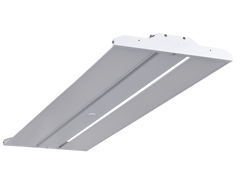
UFO High Bay, Sensor-Ready, 150/120/100W Microwave Motion Sensor with Daylight Priority PIR Motion Sensor for Linear High BaysWhen Is It Worth It?
Good fit
- Multiple shifts or 24/7 operation
- Uneven occupancy across zones
- High ceilings (15 ft+)
- Rising energy costs
- Sustainability goals
Less compelling
- Small storage units
- Spaces used only briefly
- Short remaining lease terms
Things to Plan For
- Installation timing to avoid disruption
- Wireless signal coverage in racked aisles
- Upfront budget and rebate pre-approval
- Staff training on overrides and settings
Lighting yards and docks too? See The Definitive Guide to Outdoor Security Lighting.
The Verdict
For medium to large warehouses running long hours, smart lighting is usually worth it: more savings, less maintenance, better safety and useful data. For small or lightly used spaces, plain LED with simple sensors is often enough.
Share your layout and hours, and we'll suggest fixtures and controls.
FAQs
Is smart lighting worth it for warehouses?
For medium to large facilities running long hours, usually yes.
How much energy can it save?
It depends on how often areas are empty and how much daylight you get. Controls add savings on top of the LED upgrade itself.
What's the payback?
It varies with hours, facility size, energy rates and rebates. We can help estimate it for your site.
Do controls work with existing LED fixtures?
Some can be added to sensor-ready fixtures; others need integrated smart high bays.
Are there rebates for controls?
Many utilities offer them for DLC-listed fixtures and qualifying controls. Check your local program.
Keep reading
Recommended for this guide
View all Warehouse LightsIn stock and ready to ship. Volume pricing applied in cart.

LED Linear High Bay Light, 4ft, 300W/225W/160W, CCT 3500/4000/5000K, 45,000 Lumens, 120-277 VAC
Model # 16-LHB-003
300W/225W/160W · 45,000 Lumens · 120-277 VAC
$179.95 / unit
84 in stock · ships in 1–3 days

LED Shop Light - Linkable(Frosted Lens), 8FT, 60W, CCT 5000K, 7800 Lumens
Model # 22-IT8-007
60 Watt · 7,800 Lumens · 100-277 VAC
From$20.75 / light
in a pack of 40
84 in stock · ships in 1–3 days
Choose options
8FT LED Vapor Tight Fixture, Selectable 100W/80W/70W/60W/50W and CCT, 100-277 VAC, 12,500 Lumens
Model # 016-VTL-003
50W-100W · 12,500 Lumens · 120-277 VAC
From$135.10 / light
in a pack of 10
95 in stock · ships in 1–3 days
Choose optionsShop the products in this guide
Browse the fixtures covered in this article.